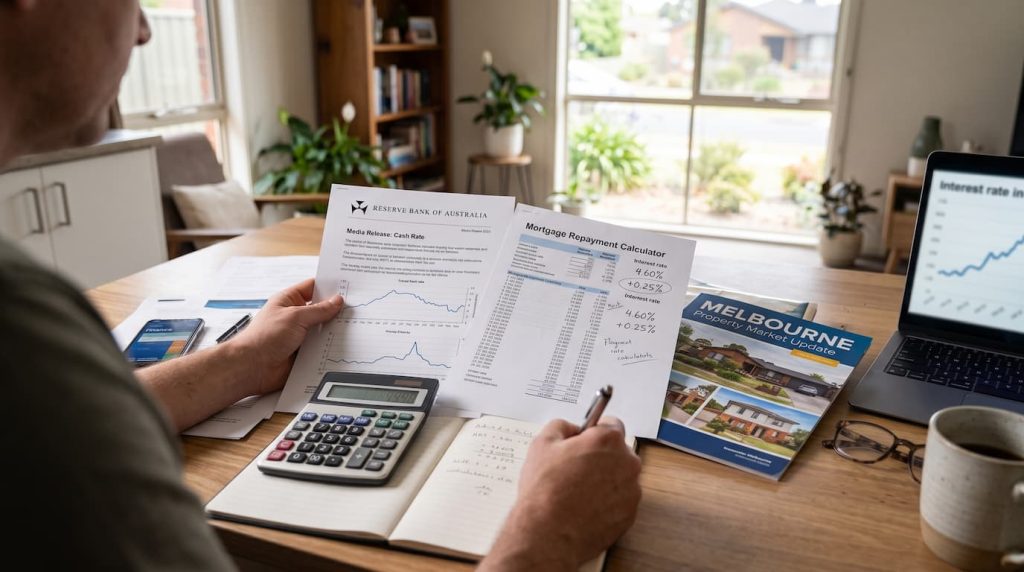

Australia’s housing slowdown is spreading beyond Sydney and Melbourne, with Brisbane and Adelaide also recording property price declines. Recent interest rate rises, reduced borrowing capacity and changes to property taxation are weighing on buyer confidence, although softer prices could create opportunities for first-home buyers and investors who remain in a position to purchase.
For buyers considering opportunities as market conditions change, reviewing suitable home loans or investment home loans can help establish borrowing capacity before entering the market.
Key Takeaways
- National property prices fell 0.7 per cent in July.
- Brisbane and Adelaide have now joined Sydney and Melbourne in recording price declines.
- Brisbane recorded a 0.6 per cent fall, while Adelaide declined 0.2 per cent.
- Higher interest rates and property tax changes are contributing to weaker market conditions.
- Falling prices could provide opportunities for first-home buyers, although further economic weakness remains a risk.
Are Property Price Falls Spreading Across Australia?
The property market slowdown previously concentrated in Melbourne and Sydney is now appearing in other parts of the country.
Cotality figures show national property prices fell 0.7 per cent in July, while Brisbane declined by 0.6 per cent and Adelaide by 0.2 per cent. It marked the second consecutive month of falling prices in both Brisbane and Adelaide.
Western Australia is still recording property price growth, but momentum has slowed significantly, with prices increasing by just 0.1 per cent in July.
Why Is Brisbane's Property Market Slowing So Quickly?
Brisbane has experienced a particularly noticeable change in market conditions.
Cotality head of research Gerard Burg told The Business:
“There’s been a really rapid deterioration in conditions in Brisbane.”
One of the clearest signs is the amount of property available for sale. In February, Brisbane’s total stock was around 25 per cent below its five-year average. It has since risen to approximately 6 per cent above that average.
Greater housing supply gives buyers more choice and can reduce the competition that previously supported rapid price growth.
What's Driving Property Prices Lower?
Two major factors are currently weighing on Australia’s housing market: higher interest rates and changes to property taxation.
According to the client content, three interest rate increases during 2026 have reduced borrowing capacity, while recent changes involving negative gearing and Capital Gains Tax have also affected property market sentiment.
Burg explained that these effects can take time to flow through the market:
“These policy issues can take time for people to really process the change and consider what’s happening.”
Higher rates also mean borrowers require more income to qualify for the same home purchase, even in markets where property values have already fallen.
What Do Falling Property Prices Mean for First-Home Buyers?
Softer prices could provide some relief for first-home buyers who have struggled to enter Australia’s property market.
Falling values can potentially make properties more affordable and reduce the amount buyers need to save for a deposit. However, lower prices do not automatically make purchasing easier if higher interest rates have simultaneously reduced borrowing capacity.
For prospective buyers, knowing how much a lender is prepared to provide remains an important part of deciding whether falling prices genuinely improve affordability.
Could Sellers Start Holding Back?
Falling prices can also influence seller behaviour.
Owners who believe they have missed the peak of the market may decide not to sell, particularly if they do not urgently need to move. The original client content suggests sellers could begin withdrawing as they become less willing to accept prices below previous market highs.
This creates another variable for the market. While weaker demand puts downward pressure on prices, reduced listings could eventually limit the amount of stock available to buyers.
Are Further Interest Rate Rises Still a Risk?
Uncertainty surrounding interest rates continues to affect both investors and owner-occupiers.
Independent economist Alan Oster told the ABC that buyers remain concerned about the possibility of additional interest rate increases, despite most economists expecting rates to remain unchanged at the next Reserve Bank meeting.
“There’s a little bit of uncertainty about whether the Reserve Bank might even do more rate hikes.”
Oster also pointed to concerns surrounding negative gearing but ultimately described the current housing weakness primarily as an interest rate effect.
Could Australian Property Prices Fall Further?
The outlook could become considerably weaker if broader economic conditions deteriorate.
Oster said that if unemployment were to worsen significantly, property prices could potentially fall by 10 to 15 per cent. However, such an economic deterioration could also cause the Reserve Bank to begin reducing interest rates.
For property investors, this means the outlook cannot be judged on price movements alone. Interest rates, borrowing capacity, employment conditions and taxation policy all influence whether a property opportunity makes financial sense.
What Should Property Buyers Consider in a Slower Market?
A softer market can provide opportunities, particularly when buyers have more choice and less competition. But falling prices alone do not necessarily make a property a good investment.
Buyers still need to consider their borrowing capacity, expected rental income, ongoing costs and ability to manage future interest rate changes.
For investors evaluating opportunities during the slowdown, Perry Finance can help assess available investment property finance based on individual circumstances.
Speak With Perry Finance About Your Property Finance Options
Australia’s property market is changing quickly, and conditions are no longer weakening only in Sydney and Melbourne. For buyers and investors, understanding what changing property values and lending conditions mean for their own finances is increasingly important.
Learn more about Perry Finance or contact Perry Finance to discuss your property finance options.