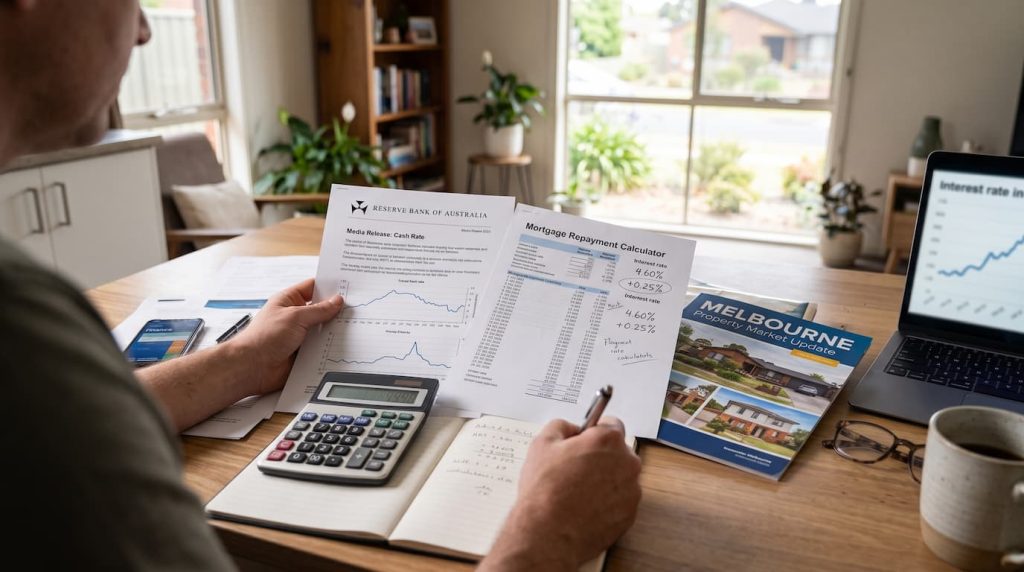

Getting your property investment tax return right is about more than claiming as many deductions as possible. Melbourne property investors need to distinguish between immediate deductions and expenses claimed over time, correctly apportion income and interest, and maintain records that reflect how their investment is actually structured.
Good tax planning can also begin before you purchase. Having a clear structure for your investment home loan can make it easier to keep investment and personal borrowing separate once you own the property.
Key Takeaways
- Repairs and capital improvements are treated differently for tax purposes.
- Some borrowing expenses are deductible over several years rather than immediately.
- Co-owners generally need to report rental income and expenses according to their legal ownership interests.
- Travel relating to residential investment properties is generally not deductible.
- Using investment loan funds for private purposes can complicate interest deductions.
- A professional depreciation schedule can help identify eligible deductions that investors may otherwise overlook.
1. Are You Claiming Capital Improvements as Immediate Repairs?
One of the biggest mistakes property investors can make is treating a capital improvement as an immediately deductible repair.
Repairs and maintenance generally relate to fixing deterioration or damage to an existing part of the property. Examples include repairing a leaking roof or fixing a broken gate.
Structural renovations and new assets are different. These expenses generally need to be claimed over time rather than deducted entirely in the year you pay for them.
For example, upgrading the kitchen in a Richmond terrace or installing a new split-system air conditioner in a South Yarra apartment may need to be claimed through the applicable capital works or plant and equipment depreciation rules.
Understanding that distinction can prevent an investor from incorrectly claiming a large upfront deduction.
2. Are You Forgetting Deductible Borrowing Expenses?
The property itself is not the only source of potential deductions. Some of the costs involved in arranging investment finance may also be deductible.
The client content identifies borrowing expenses such as loan establishment fees, title search fees, stamp duty on institutional mortgages and mortgage broker commissions. These generally cannot be claimed entirely in the first year.
Instead, eligible borrowing expenses are generally deducted over five years or the term of the loan, whichever is shorter.
Where total eligible borrowing expenses are $100 or less, the client content notes they can be claimed in full in the first year.
Keeping accurate records of the costs associated with arranging your investment finance can therefore be just as important as tracking ongoing property expenses.
3. Are Co-Owners Reporting Income and Expenses Correctly?
Owning an investment property with another person does not necessarily mean you can decide how rental income and deductions are divided at tax time.
The legal ownership of the property matters.
For example, if two investors legally own a rental property in a 30/70 split, the rental income and expenses should reflect those ownership interests rather than automatically being divided equally.
This can become particularly important where partners have different incomes or where one person contributes more towards property expenses.
The ownership structure should therefore be considered carefully when purchasing an investment property, rather than only when the first tax return is due.
4. Are You Claiming Travel to Inspect a Residential Investment Property?
Residential property investors generally cannot claim travel expenses incurred when visiting or inspecting their rental properties.
That includes expenses such as:
- flights and train fares
- fuel and vehicle expenses
- hotel accommodation
So, driving across Melbourne to inspect a rental property or travelling interstate to check on an investment does not automatically create a deductible travel expense.
The client content distinguishes this from certain commercial property investment circumstances, where different rules may apply.
For investors considering commercial assets, Perry Finance also provides finance options for commercial investment properties.
5. Are You Mixing Personal and Investment Loan Interest?
This is an area where the way you use borrowed money becomes particularly important.
An investor might redraw money from an investment loan to purchase a family car or pay for a holiday and assume that all of the loan interest remains deductible because the loan itself is secured against an investment property.
That assumption can cause problems.
The ATO considers the purpose for which borrowed funds are used, rather than simply the property securing the loan. If part of the borrowing is used privately, the deductible and non-deductible portions of the interest need to be separated.
This is one reason keeping personal and investment borrowing clearly separated can make ongoing tax administration much easier.
6. Are You Missing Depreciation Deductions?
Older investment properties should not automatically be dismissed as having no depreciation opportunities.
A Victorian-era cottage in Fitzroy or an older brick apartment in St Kilda may still contain newer fixtures, carpets, blinds or structural improvements that potentially qualify for depreciation deductions.
A professional depreciation schedule prepared by an appropriately qualified specialist can help identify eligible items and establish how those deductions should be claimed over time.
For property investors, depreciation is particularly useful to investigate because eligible deductions do not necessarily correspond with a new cash expense incurred each financial year.
How Can Property Investors Make Tax Time Easier?
A well-organised property investment tax return begins long before the end of the financial year.
Keeping loan documents, invoices, ownership records and evidence of property expenses organised throughout the year can make it easier for your accountant or tax adviser to determine what can be claimed and when.
It is also worth reviewing the structure of your property finance before redrawing, refinancing or combining investment and personal debt. What appears to be a straightforward lending decision can have tax implications later.
Tax circumstances vary between investors, so professional tax advice should be sought before making decisions based on potential deductions.
Get Your Investment Finance Structure Right From the Start
Tax efficiency is only one part of a successful property investment strategy. The way your lending is structured can also affect cash flow, flexibility and how easily investment borrowing can be tracked over time.
If you’re purchasing an investment property or reviewing an existing loan, learn more about Perry Finance or contact Perry Finance to discuss your finance options.