Land banking can still deliver strong gains in Melbourne’s growth corridors, but Victoria’s Windfall Gains Tax, expanded vacant land tax and low land tax thresholds have made holding raw land far more costly. It suits investors with deep cash reserves, a clear development plan and the right property development finance.
Key Takeaways
- Land banking involves buying undeveloped land in the hope it rises in value after rezoning or development approval.
- Parcels near planned rail extensions or freeway interchanges in Melbourne’s growth corridors offer the strongest uplift potential.
- The Windfall Gains Tax applies a flat 50 per cent rate to value uplifts exceeding $500,000.
- Raw acreage earns no rental yield, so higher interest rates and state land taxes create a persistent cash drain.
What Is Land Banking?
The property investment strategy we call land banking is the idea to buy undeveloped land in the hope it will rise in value after being rezoned or approved for development.
Property developers in land banking schemes buy the land and can divide it into smaller blocks to sell to other investors.
It’s considered a high-stakes game where the rewards can be big, but the risks are considerable.
Why Does Land Banking in Melbourne Need a Calculated Approach?
In today’s economic environment in Melbourne, sitting on raw, unzoned land on the city’s fringes requires a calculated approach due to a shift in state taxes and economic policy.
While the potential for wealth generation remains significant, navigating the balance between growth corridor upside and Victoria’s aggressive holding costs is crucial.
Where Is the Upside for Land Banking Investors?
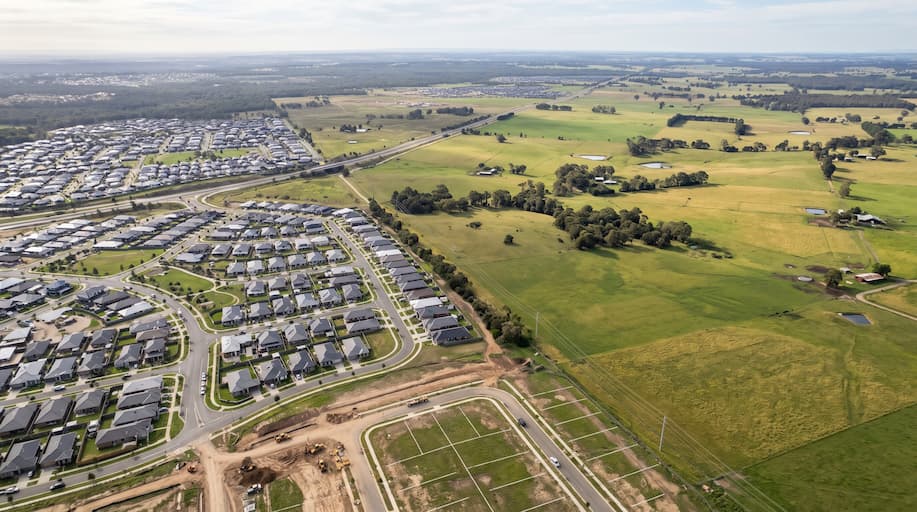
The primary appeal of land banking lies in capital appreciation through infrastructure-led value capture. Buying large, unzoned acreage before the council has officially planned out a new neighbourhood cuts out the middlemen and guarantees solid price jumps when development begins.
Major growth corridors in the west, north, and south-east continue to absorb swelling population numbers. Securing strategic parcels near planned regional rail extensions or freeway interchanges remains a proven way to capture exponential value uplift once regional planning authorities greenlight a zone change.
Which Victorian Taxes Make Holding Land So Costly?
However, the Victorian State Government has actively introduced strict regulatory measures designed to penalise speculative, idle landholdings and force development.
The biggest hurdle to investor profit margins is the State Revenue Office Windfall Gains Tax, which slaps a flat 50 per cent tax rate on value uplifts exceeding $500,000.
While payment can be deferred, the accumulating government interest chips away at long-term gains. Furthermore, the expansion of the Vacant Residential Land Tax specifically penalises metropolitan land left undeveloped for five years or more, hitting owners with escalating annual fines up to 3 per cent of the capital improved value.
Compounding these heavy tax burdens are historically low land tax thresholds, sitting at just $50,000 for individuals and $25,000 for trusts, which quickly push large fringe landholdings into elevated progressive tax brackets.
What Happens When Holding Costs Start to Bite?
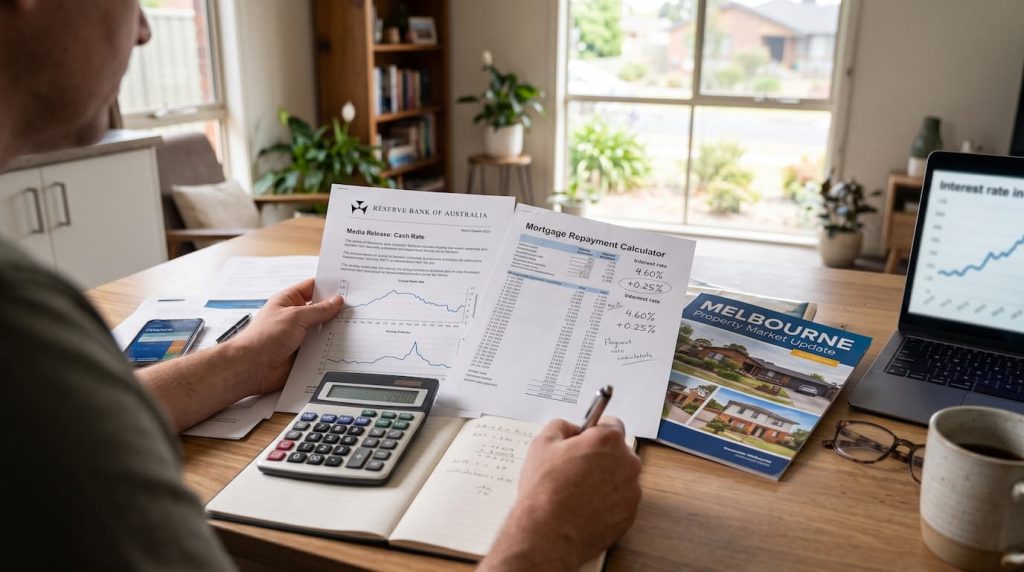
When you combine these aggressive tax settings with higher interest rates and zero rental yield from raw acreage, financing a holding becomes a severe and persistent cash bleed.
If a parcel gets trapped in environmental offsets or council planning bottlenecks, capital can easily remain locked up for over a decade.
Plan Your Land Investment Finance With Perry Finance
Ultimately, land banking in modern Melbourne is a high-reward strategy, but it requires deep cash reserves and flawless active-development execution to survive the state’s hostile holding costs.
Tax and holding costs vary with each investor’s structure and circumstances, so get tax and finance advice before you commit to a land holding.
Perry Finance helps Melbourne home buyers, property investors and businesses find the right finance for their goals. To discuss your options, contact Perry Finance today.